
Lakeside Sports Chiropractic and Physical Therapy
Shockwave Therapy in Cornelius, NC
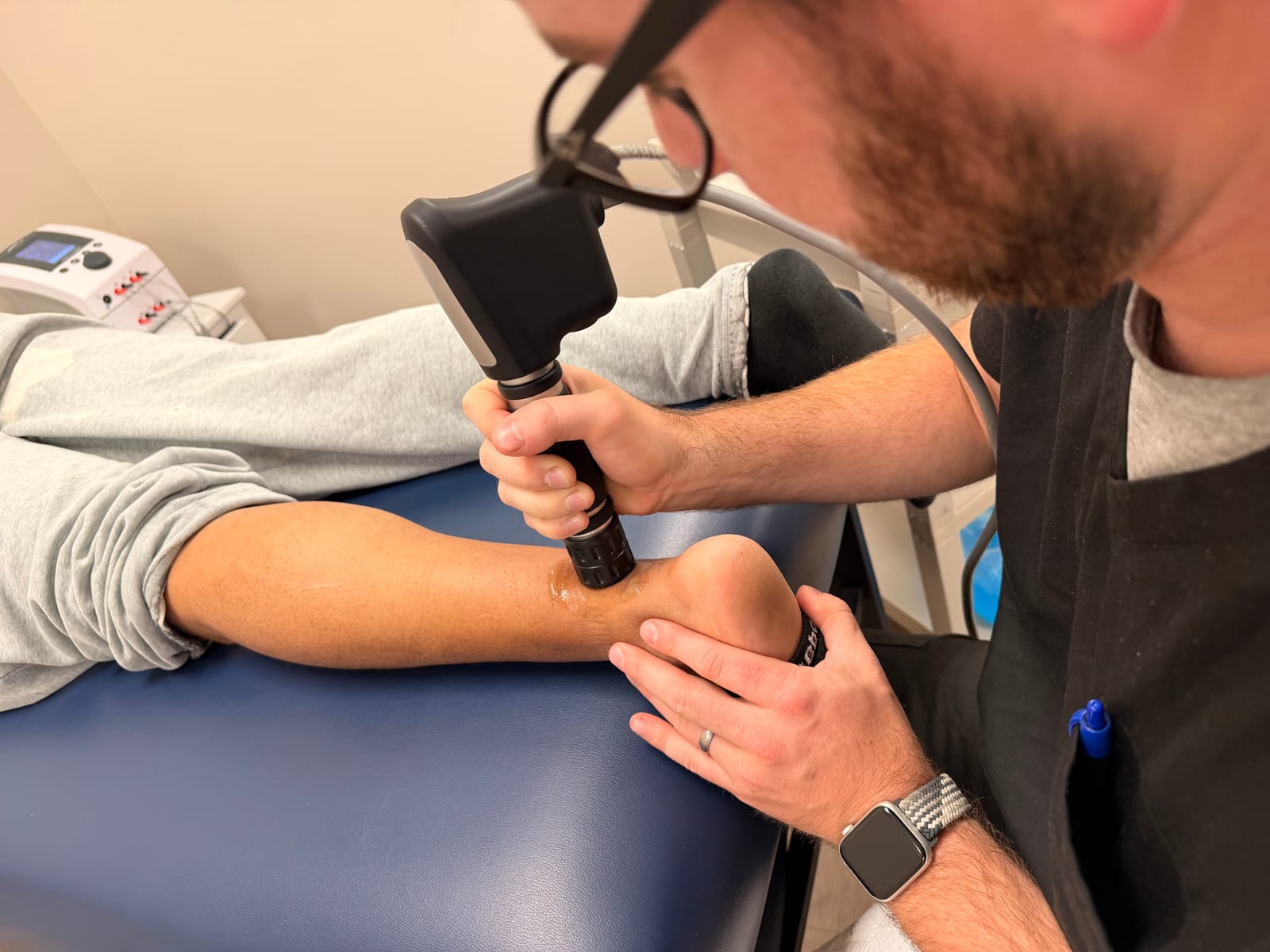
Shockwave therapy, also called extracorporeal shock wave therapy, uses acoustic waves as a non-invasive treatment option for stubborn tendon and soft-tissue pain. Lakeside can assess whether this service fits your symptoms, activity goals and broader rehabilitation plan.
Book an assessmentThe short answer
Shockwave therapy is one tool that may be considered when pain has persisted and the clinical findings support it. It is not a guarantee, a diagnosis or a replacement for a complete plan that addresses strength, movement and activity load.
At 11220 Treynorth Drive, Suite A, Cornelius, NC 28031, the clinic combines chiropractic care and physical therapy. Call (704) 896-8446 to discuss whether an assessment is appropriate.
Understand the modality
What is shockwave therapy?
Extracorporeal shock wave therapy delivers acoustic waves into a targeted area. The current Lakeside service page describes it as non-invasive care for stubborn tendon pain. Because pain can come from different tissues and conditions, the first step is deciding whether the pattern fits this modality or calls for another evaluation.
The name can sound similar to a surgical procedure, but the clinic presents its service as an in-office, non-surgical option. Ask what device, settings, treatment area and safety considerations apply to your case. A responsible explanation should include what the treatment can and cannot address.
Targeted
The clinician chooses the treatment area after considering symptoms, examination findings and your goals.
Non-invasive
The service is described as non-invasive. That does not mean it is appropriate for every person or every pain pattern.
Part of a plan
Strength, mobility, load management and return-to-activity work may still matter after or alongside a modality.
Before treatment
What should an assessment cover?
A useful assessment reviews when the pain began, what activities make it worse, what has already been tried and what you need the area to do. It should also consider health history, medications, skin or tissue concerns, neurological symptoms and any reason to coordinate with another clinician.
Bring imaging reports or prior treatment information that you already have. Imaging can be useful context, but the report is only one part of deciding whether shockwave therapy makes sense for the symptoms you feel.
Questions to ask
- What is the working explanation for my pain?
- Why is shockwave being considered for my presentation?
- What should the treatment feel like?
- What activity should I change before or after a visit?
- How will we decide whether the plan is helping?
- When should I contact the clinic or another clinician?
The treatment experience
What can a session feel like?
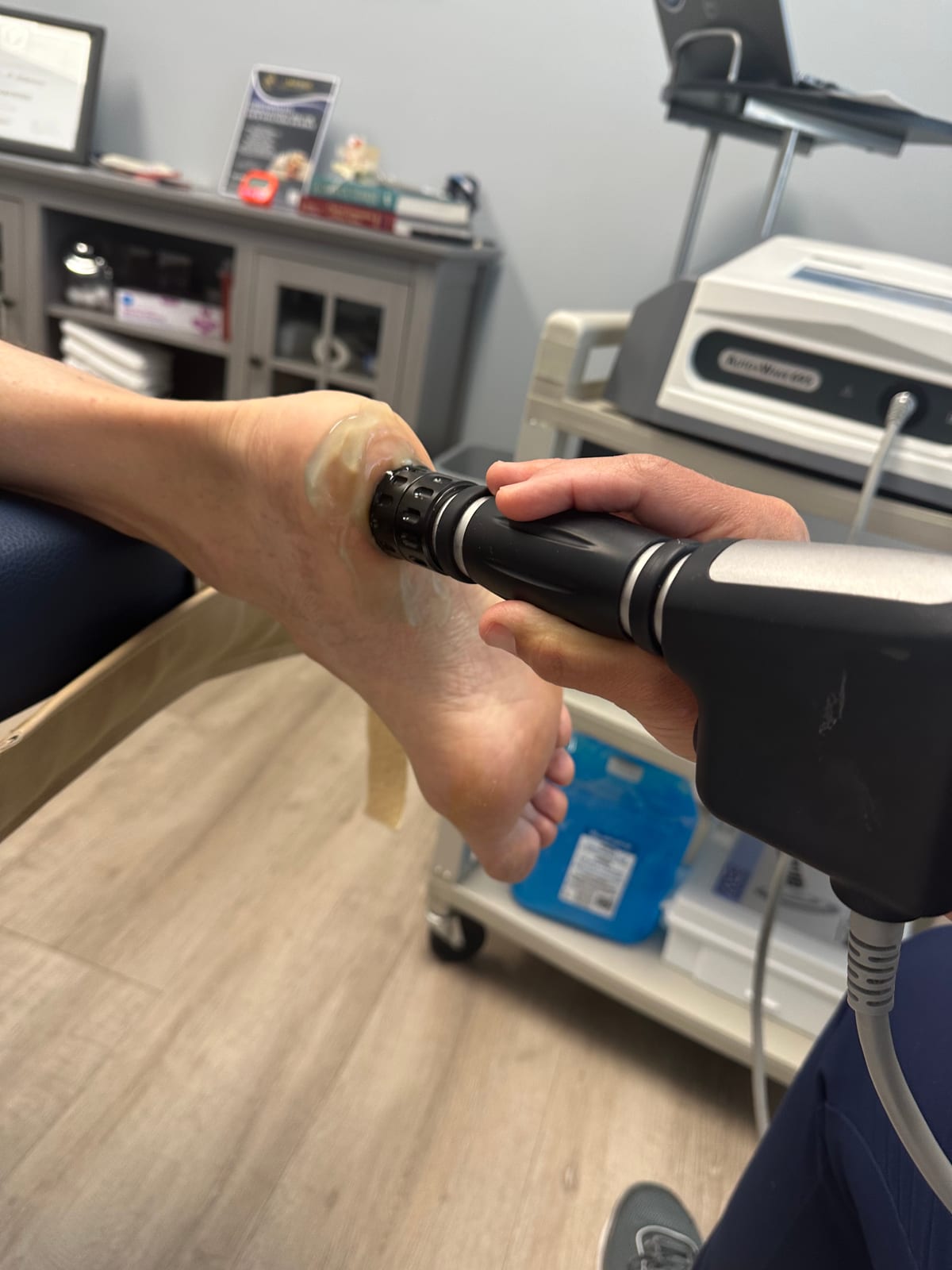
Position and preparation
You will be positioned so the clinician can access the treatment area. Tell the team about tenderness, skin changes, medication questions or anything that could affect comfort.
Application
The device delivers acoustic waves to the selected area. Sensation can vary by location, settings and individual tolerance. Speak up if the intensity needs to be adjusted or the experience feels unsafe.
Aftercare and activity
The clinician should explain what activity is reasonable, what response to monitor and when to follow up. A treatment session is not a substitute for the active work that supports long-term function.
Build capacity
Why pair a modality with rehabilitation?
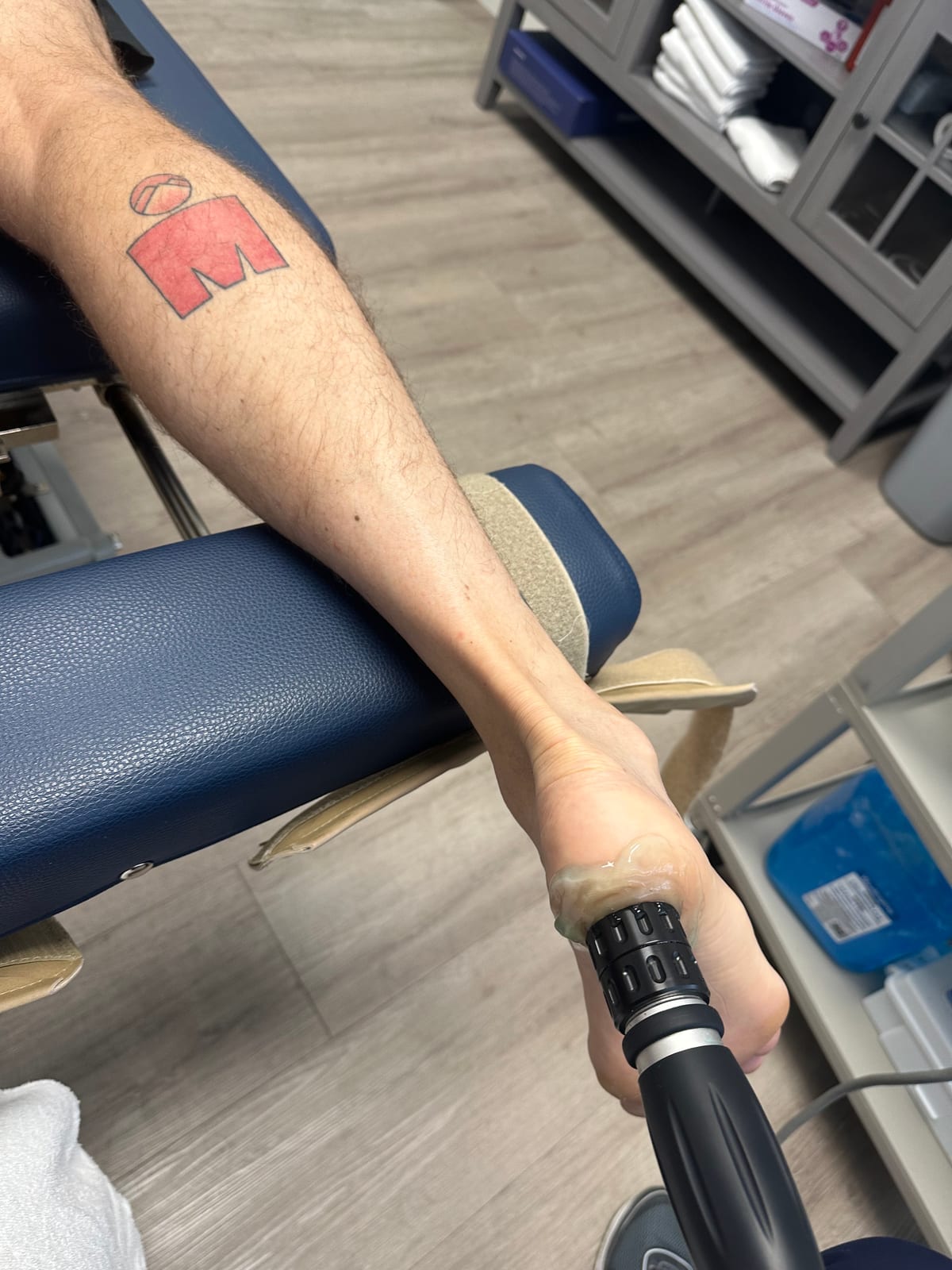
Pain often changes the way a person moves. If the original workload, strength, mobility or technique is not addressed, symptoms may continue even when a treatment feels useful in the short term. Physical therapy can help restore movement and capacity in a measured way. Chiropractic care may be considered when the clinician finds it appropriate. The plan should match the task you want to resume.
Load management
Adjust training, work or daily activity so the area has a reasonable chance to tolerate the next step.
Strength and control
Progressive exercise can help rebuild the capacity needed for walking, lifting, sport or repeated work.
Feedback
Use symptom behavior and function to decide what to change, rather than chasing a fixed number of sessions.
Timeline
How many sessions are needed?
There is no universal session count. The appropriate schedule depends on the area treated, how long symptoms have been present, your health history, activity demands and response to care. The clinic does not publish a fixed protocol that applies to every patient.
Ask how progress will be measured and what would cause the plan to change. Useful markers can include walking, sleep, range of motion, work tolerance or a sport task that matters to you.
Cost and insurance
The site does not publish a shockwave-specific price. The homepage says most insurance is accepted, but coverage varies by plan. Confirm benefits, fees and patient responsibility with the clinic before care.
Recovery
Follow the activity guidance you receive. Do not interpret temporary soreness or a temporary change in symptoms as proof that the treatment is working or failing. Contact the clinic if the response is concerning or does not match the instructions you were given.
Safety first
When is another evaluation important?
Seek prompt medical attention for severe or rapidly worsening pain, major trauma, new weakness or numbness, fever, unexplained swelling, or symptoms that do not fit the pattern discussed at your assessment. Shockwave therapy should not delay urgent care.
Related Lakeside services
Explore plantar fasciitis care, shoulder pain treatment, Class IV laser and physical rehab to understand how the clinic connects assessment with active care.
This page provides general education and does not diagnose or guarantee an outcome.
Use the information well
How should you judge progress?
Progress after a shockwave session should be discussed in terms of the activity that matters to you. That might be walking farther, sleeping more comfortably, completing a work task, or returning to a controlled training exposure. The right measure depends on the location and the problem being assessed.
Keep the plan connected to the reason you sought care. If symptoms change, share the timing and the activity around the change. The clinician can then decide whether the next step is more education, a different exercise, a change in load, another service or coordination with a medical professional.
A modality can be one part of a broader plan. It should not replace a diagnosis when symptoms are unclear, active rehabilitation when capacity needs rebuilding, or urgent medical evaluation when warning signs are present. Clear instructions about activity, comfort and follow-up make the treatment conversation more useful.
Choose one measure
Pick a meaningful task and describe how it responds across the week.
Track next-day response
Notice delayed soreness, swelling, function and activity tolerance rather than one moment alone.
Review the plan
Ask what would change if the expected response does not occur.
Have questions about shockwave therapy?
Call (704) 896-8446 or use the existing Lakeside booking path.
Patient questions
Shockwave therapy questions
What happens at a first shockwave therapy visit?
The first visit is used to review your history, symptoms and goals, complete an assessment and decide whether shockwave therapy is appropriate.
How much does shockwave therapy cost?
The site does not publish a shockwave-specific price. Ask the team about fees, insurance benefits and patient responsibility.
Does insurance cover shockwave therapy?
The homepage says most insurance is accepted, but coverage depends on the individual plan. Confirm benefits with the clinic before care.
How many shockwave sessions will I need?
There is no fixed session count for every patient. The schedule depends on the treatment area, assessment, goals and response to care.
What does shockwave therapy feel like?
Sensation can vary by treatment area, device settings and individual tolerance. Tell the clinician if the experience needs to be adjusted.
Can I exercise after shockwave therapy?
Follow the activity guidance from the clinician because recommendations depend on the area treated, your symptoms and the broader rehabilitation plan.